
Why Your SEO Is ‘Working’ but Your Brand Isn’t Showing Up in AI Answers
Things have changed in recent years. In Google today, a lot of top-of-funnel content doesn’t get clicks anymore. AI Overviews (or AI Mode) now handle basic questions and early research directly on the results page, so users often get the information they need without ever leaving the results page.
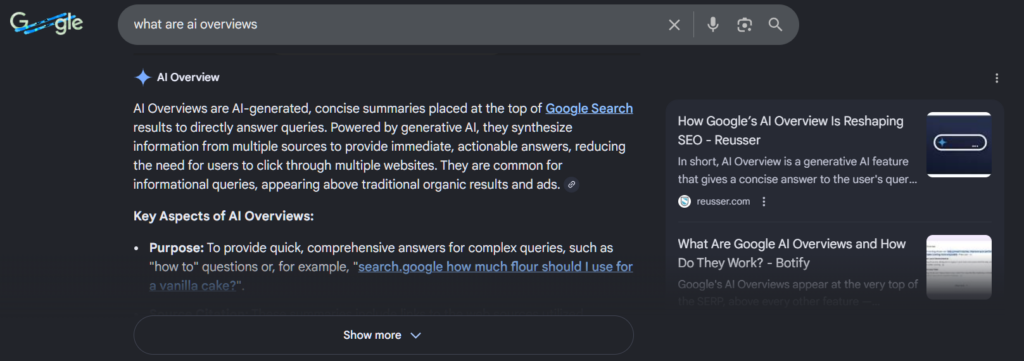
The demand for your content didn’t disappear — it just moved. Search engine usage is still growing. People are still learning and comparing, but they’re more frequently doing it inside AI answers instead of clicking through to your webpage. If your brand isn’t included in those AI answers, your content can exist and even rank in the 10 blue links, yet never actually be seen by a searcher.
You get visible in AI answers by making your brand and content easy for AI systems to understand, trust, and reuse across the entire information ecosystem, not just your website.
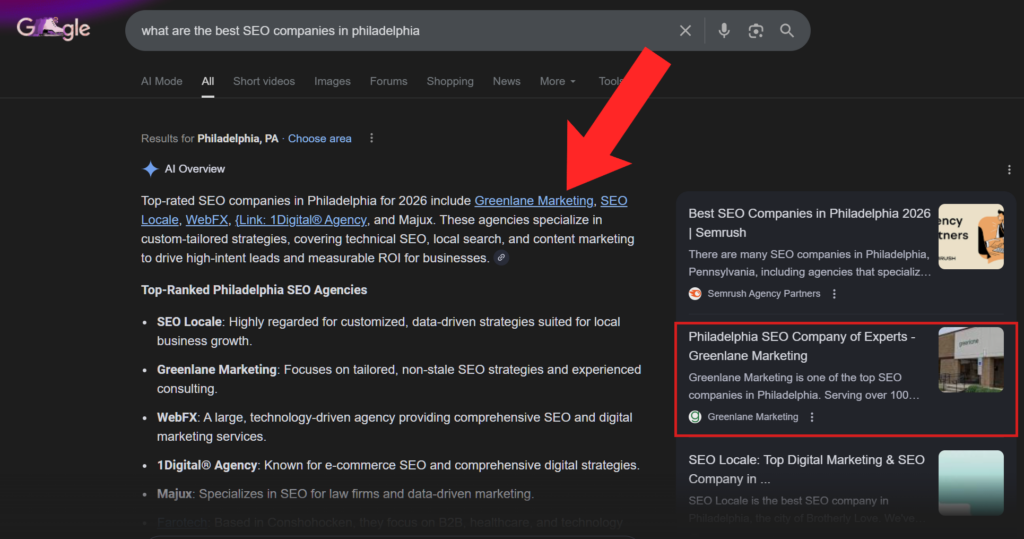
That means clearly defining what you’re known for, reinforcing it consistently across third-party sources, and publishing content that explains concepts cleanly enough that AI can cite it without risk. In many cases, ranking pages the traditional way is no longer the goal. Being a reliable source inside the answer is.
What “Working SEO” Usually Looks Like Today
Maybe your SEO doesn’t look broken.
Pages still rank.
Organic traffic hasn’t fallen off a cliff.
Content is getting published and indexed.
SEO Reports still show progress or stability.
From a traditional SEO perspective, things appear to be “working.” And that’s exactly why this problem is confusing. Nothing obvious is failing, yet your brand is missing from AI responses where buyers learn and compare.
The issue isn’t that SEO stopped working. It’s that the definition of visibility changed, and most SEO programs haven’t caught up yet.
Why This Matters
AI answers are starting to replace the clicks people used to make when comparing options or evaluating products. When buyers ask questions like “Which option is best?” or “What’s the difference between X and Y?”, they often get the answer right away on Google’s platform. If your brand doesn’t show up in those answers, buyers never even think about you. That’s not just an SEO issue — it means lost revenue.
AI systems tend to reuse sources that have already worked well for them. When an AI uses a source to answer a question, and that source explains the topic clearly, consistently, and without risk, the system is more likely to use it again for similar questions. When AI answers questions, it remembers which sources helped it explain the topic well. If a brand is used early and the explanation works, AI is more likely to use that same brand again the next time a similar question comes up. Brands that are not used in those first explanations are easier to ignore later (even if they exist). New brands can still be added to the fold, but they must explain the topic more clearly than the sources the AI already relies on. That is why replacing the brands AI already uses takes more time and effort.
AI rewards clarity, not the amount or size of content. You don’t need more content — you need to be easier to understand than your competitors. That creates real opportunity for focused brands to out-position larger, noisier ones.
Top-funnel traffic is becoming less reliable. AI-driven visibility shifts effort toward fewer, higher-leverage assets that directly influence decisions, rather than chasing clicks that may never come back.
How AI Visibility Actually Works
Inputs
AI answers do not scan the entire web every time they respond to a question. They rely on a smaller, curated set of sources they already understand and trust. Those sources are built from a mix of signals, including your core site pages that explain who you are and what you do, repeated explanations of the same ideas across multiple places online, and independent third-party mentions that confirm your role in the category.
AI also favors content that clearly and neutrally explains how something works, rather than content focused on selling. When your expertise only exists in blog posts or marketing copy, and not in clear, reusable explanations supported elsewhere, AI has very little reliable material to pull from.
AI answers are designed to explain, not to persuade people to buy. These systems are designed to respond to questions like:
- “What is…”
- “How does…”
- “What’s the difference between…”
They are not designed to recommend vendors aggressively or repeat marketing claims. When content is written to sell, it introduces:
- Subjective language
- Claims that require verification
- Bias toward one outcome
That makes the content harder to summarize safely. AI systems prefer sources that can be reused without sounding like advertising.
Signals
From those inputs, AI looks for specific signals that tell it whether a source is safe and useful to reuse. It looks for clear and consistent positioning so it can easily understand what a brand does and who it’s for. It checks whether what you say about yourself matches what other independent sources say about you, because agreement reduces risk. It favors explanations that use the same language people use when they ask questions, since that makes answers easier to assemble. And it prefers neutral, factual wording that can be summarized without sounding biased or misleading.
When a site sounds overly promotional, unclear, or contradictory, AI has to work harder to interpret it. Rather than take that risk, it simply skips the source, even if the page ranks well in traditional search results.
In summary:
- Clear, consistent positioning (“This brand does X for Y”)
- Agreement between what you say and what others say about you
- Explanations that match how users phrase questions
- Neutral, factual language that can be summarized safely
Constraints
AI answers are conservative by design. They avoid:
- Self-promotional claims
- Ambiguous positioning
- Conflicting information
- Sources that can’t be compressed cleanly into an answer
This is why many “SEO-optimized” and middle-funnel/bottom-funnel pages never appear in AI answers. They were written to convert, not to be cited.
Tradeoffs
You cannot optimize for every goal simultaneously. Content written to convert visitors often uses persuasive language, calls to action, and competitive claims, while content written to be cited needs to be neutral, explanatory, and easy to reuse.
Chasing broad keyword coverage can spread your message too thin, whereas owning a narrow concept makes it easier for AI to understand what you are actually known for.
Publishing a high volume of content can create noise if the meaning is inconsistent, while fewer pages with clear intent send a stronger signal. AI systems consistently favor clarity over coverage. Brands that try to do everything at once usually end up being unclear about what they stand for.
Common Misconceptions (and why they fail)
“If we rank well, AI will pick us up eventually.”
This belief makes sense because, for a long time, ranking was visibility. If you ranked on page one, users saw you, clicked you, and evaluated you.
AI answers break that link. They don’t need to surface ranked pages because they’re not sending users to a list of options. They’re assembling an explanation. To do that, they look for sources they can trust and reuse, not just pages that happen to rank well. Many pages still rank because they satisfy traditional search signals, but they never appear in AI answers because they don’t explain the topic clearly enough to be summarized and cited.
“We just need more content, FAQs, or schema.”
This advice sounds appealing because it feels technical and actionable. Adding more content, more FAQs, or more structured data feels like progress. The problem is that AI systems are not struggling to read or understand pages. They are filtering aggressively. Their job is to narrow down sources, not expand them.
When you add more content without clarifying what you are actually known for, you don’t increase trust. You increase noise. That makes it harder for AI to determine when and why your brand should be included.
Signs Your SEO Is Working — But Your AI Visibility Isn’t
If this issue applies to you, you’ll usually see a few clear signals:
- Your competitors are mentioned in AI answers, but your brand is not
- AI explains your category correctly, but without naming you
- Your brand only appears when someone asks about you directly
- Your content ranks in search results, but never gets cited
When these patterns show up, it’s a sign that AI systems understand the topic, but don’t yet understand your role in it. That gap doesn’t show up in ranking reports, but it has real impact on who gets considered and who gets ignored.
What To Do Next
Start doing
- Clarify your core claim: You should be able to explain what your business does and who it is for in a single, plain sentence. Not a jargony slogan. Not positioning language. A factual statement that removes ambiguity. AI needs to understand your role in the category without guessing. If your description could apply to five competitors, it’s not clear enough. This sentence should be obvious on your site and reinforced everywhere else your brand appears.
- Rewrite key pages for explanation: Your most important pages should explain how things work, not just why you’re good at them. Assume AI is the reader. If a page can’t be summarized into a short, neutral explanation without losing meaning, AI won’t use it. This doesn’t mean removing conversion pages. It means separating explanation from selling, so AI has a reliable source to cite.
- Audit AI answers in your category: Look at the questions buyers ask when they are comparing options or trying to understand differences. Check which brands show up in AI answers, how they’re described, and what role they play in the explanation. Pay attention to which concepts are consistently associated with the same brands. That tells you what AI already understands and where you are missing or mispositioned.
Stop doing
- Publishing content solely to “rank”: Content created only to capture keywords often lacks clear meaning. It may rank, but it doesn’t explain anything well enough to be reused. If a page exists just because “we needed to target that term,” it’s probably not helping AI understand your brand.
- Over-optimizing copy with persuasive language: Superlatives, claims, and marketing language make content harder for AI to summarize safely. They introduce bias and ambiguity. AI avoids that. When every page tries to sell, none are useful for explanation.
- Treating your website as the only source that matters: AI does not rely on your site alone. It looks for agreement across multiple sources. If your expertise only exists on your own pages, it’s fragile. Visibility in AI answers depends on consistency across the broader information ecosystem, not just what you publish yourself.
Monitor instead
Instead of focusing only on rankings or traffic, monitor whether your brand is actually cited in AI answers and in what context. Pay close attention to how you are described when you do appear, because that tells you what AI believes you are known for. Watch which competitors are repeatedly used as examples in explanations where you might expect to appear, and look for patterns in why they are chosen instead of you. Over time, track which concepts AI consistently connects with specific brands. That association is what determines who gets reused and who gets ignored.
In summary:
- Monitor whether your brand is cited in AI answers
- Monitor how you’re positioned when mentioned
- Understand which competitors are used as examples instead of you (and why)
- Learn which concepts AI consistently associates with specific brands
What will matter next
AI answers are becoming more selective, not more inclusive. Over time, they rely on a smaller set of sources that consistently explain topics clearly and safely. Brands that establish clarity early tend to be reused, while attribution and direct clicks continue to decline. Visibility will matter more than traffic, and influence will matter more than rankings.
What will matter most going forward:
Being the example, not just an option
AI answers often explain ideas using specific brands. The brands used as examples shape how buyers understand the category.
Owning a concept, not a keyword
Keywords change. Concepts stick. AI associates brands with ideas, use cases, and explanations, not just search terms.
Consistency across the entire information ecosystem
AI looks for agreement. When your positioning is clear and reinforced across your site and independent sources, trust compounds. When it’s inconsistent, visibility erodes.
Conclusion
Traditional SEO focuses on execution: rankings, pages, and traffic. AI answers depend on interpretation: clarity, trust, and reuse.
Many brands are doing the first well and failing at the second. That’s why traditional SEO can appear to be working while AI answers quietly bypass your brand altogether.
The goal isn’t just ranking pages anymore. The goal is to be the source AI uses when explaining the category to a searcher. That requires more than traditional SEO tactics alone. It requires understanding how AI systems interpret expertise, choose sources, and reuse explanations — and then intentionally positioning your brand to fit that model.
This is no longer about chasing keywords or publishing more content. It’s about earning eligibility inside AI answers at the moment buyers are learning and comparing.
Is your brand eligible to appear in AI answers? The Greenlane team can help with your AI visibility. Contact us today.