SEO Trends for 2026: Know the 3 A’s – Authenticity, Agents, & Authority
As we navigate this past year’s AI-flooded digital landscape, our team and our clients are questioning the changes coming to the SERPs and beyond.
Every December, our SEO team likes to share our predictions for what’s to come for Google and other search engines within the organic playground.
After surveying our team of Account Managers, I noticed a theme in our 2026 SEO trends forecasting. Collectively, there were three recurring “A’s” that I feel are important to highlight before we get into the true meat and potatoes of the predictions.
The 3 A’s of SEO in 2026:
Three themes appeared in our predictions for the SERPs and the search engine optimization community to come:
| The 3 A’s | Focus | What We’ll See in 2026 | Greenlane’s Advice |
| Authenticity | Trust & Human Experience | Search engines will fiercely prioritize content backed by real experts and unique insights to combat generic AI noise. | Show Your Face & Your Data: Be original, and let your brand’s voice be heard through video and audio formats. |
| Agents | Automation & Action | AI will evolve beyond answering questions to autonomously completing transactional tasks, like ordering food and making purchases. | Optimize for Action: Understand that the goal is not just a click, but the final, automated conversion (Agentic Commerce). |
| Authority | Content Value & Currency | Informational content is easy to replicate; 2026 marks a year to focus on bottom-of-the-funnel optimization. Show your expertise, and build unshakeable trust (E-E-A-T). | Make Content Work: Move beyond content regurgitation and use primary, fresh content structured to be easily cited by LLMs. |
Let’s break down some individual trends for 2026 and look into this digital crystal ball, together.
Our Teams’ Predictions for the Top SEO Trends in 2026
Here are our top predictions for what’s going to be a trending topic for SEO to come:
1. The Human-First Mandate: Prioritizing Trust & E-E-A-T Over AI Junk
In a world drowning in flat, generic content written by robots, your authentic human experience will become your brand’s single greatest competitive advantage this year. Here are a few things to keep in mind:
Originality Over Volume
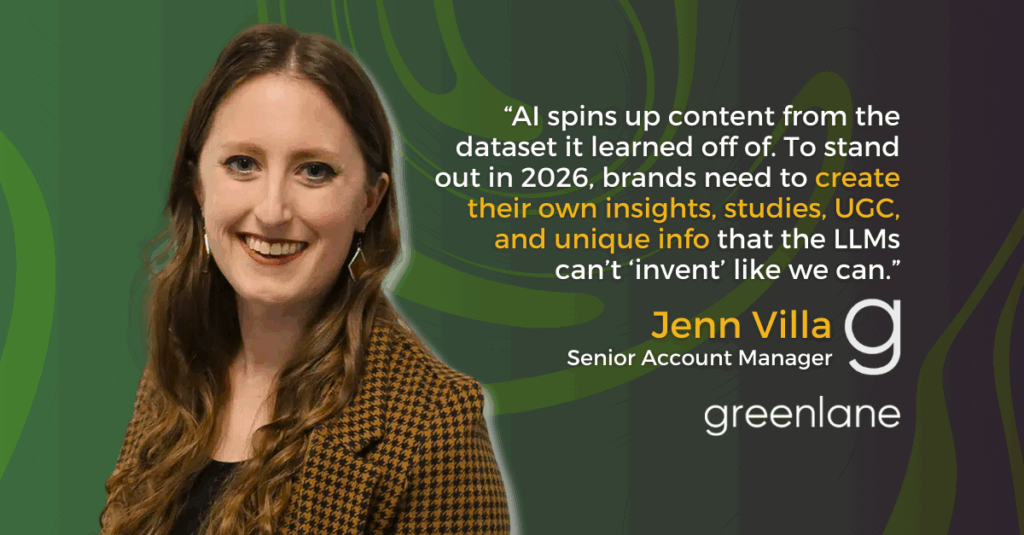
It’s no longer about publishing the most content. There’s so much trash online that’s just AI-generated this year. It’s important to remember that AI spins up content from the dataset it learned from. To stand out in 2026, brands need to create their own insights, studies, UGC, and unique info that the LLMs can’t “invent” like we can.
Instead of just rehashing what your competitors have said, the best practice for showing up in search results or being used in AI answers is to be the original source — not the echo.
Trust as the Ultimate Ranking Factor
Because of how much junky AI-generated content exists on the SERPs today, users have been losing trust in what they are reading. The “AI hallucinations” have fed us a lot of wrong information in 2025, and we’re skeptical that their answers are accurate when we search online.
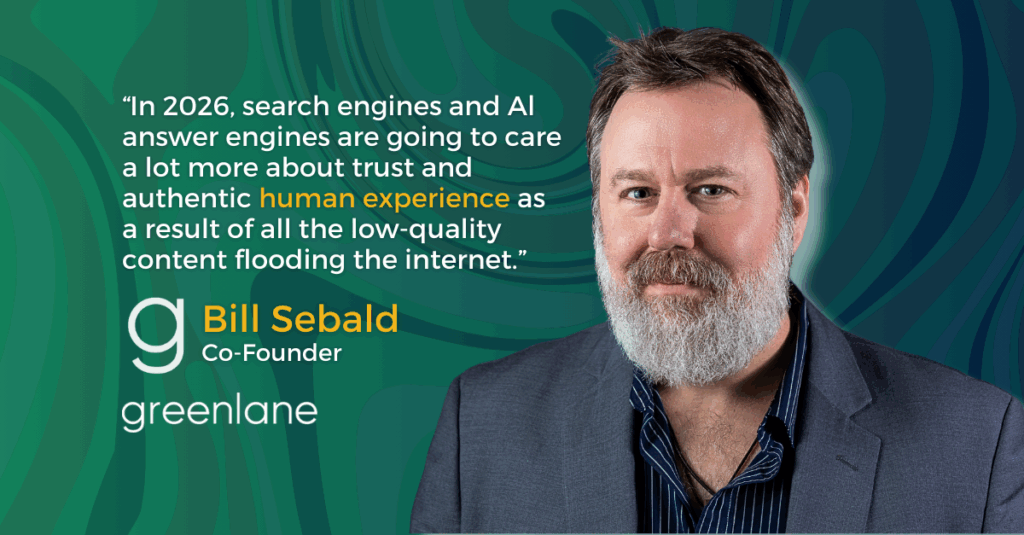
That’s why our co-founder, Bill Sebald, predicts that in 2026, “search engines and AI answer engines are going to care a lot more about trust and authentic human experience as a result of all the low-quality content flooding the internet.”
Since AI can generate a near-infinite amount of generic articles, Google and LLMs need a way to distinguish what’s truly valuable from a ranking lens. Users like us will need help discerning the legitimate from the lies, too.
More Faces Behind Brands
As a Content SME, I personally think that brands that stand out will showcase the faces behind a brand to stand out from Al-gen trash. This is about strengthening your site’s and individual authors’ E-E-A-T framework (Experience, Expertise, Authoritativeness, and Trustworthiness), which becomes even more critical for both traditional search and AI-generated answers.
2. Informational Content Must Act Like a Commercial Landing Page
The days of writing a passive blog post are over. While there is still a time and a place for blogging, of course, we need to do some different things to stand out and get recognition on the SERPs. In the age of AI, your informational content strategy needs an adjustment in 2026 to compete in AI Overviews and organically.

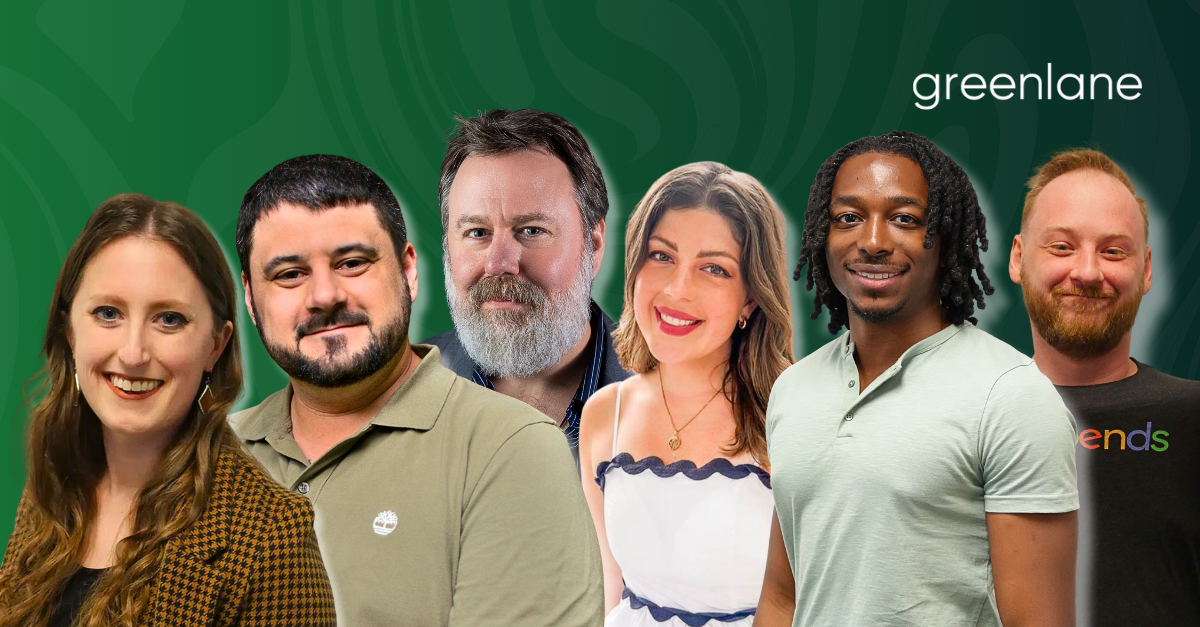
Adam Wells makes a critical point: “LLMs are reliant on fresh content. If you are looking for ways to get more AI citations, treat informational content — that is, knowledge centers, blogs and resource content — more like commercial landing pages and keep them up-to-date.”
Therefore, to earn citations from these AI services and stay on top of the latest SEO trends, you need to:
- Stay on top of article freshness, regularly checking for relevant posts to trending topics, and simplifying what old posts are due for an update.
- Integrate CTAs on forgotten content to treat all pages as a conversion opportunity.
- Diversify formats to rank for different SERP Features or AI Overviews.
- Have consistent messaging. If you have conflicting information on the website, how will LLMs know which is correct and why would they trust you to provide it?
- Use structured data AND follow its lead. Schema markup is used to connect your website with different entities, providing a blueprint to Google about where your brand fits in the world. But don’t let the schema do all the work. Follow this blueprint by connecting the content on your website – the parts read by LLMS – to these same entities.
- Keep tabs on how LLMs view your brand. We all Google our own names sometimes just to see what it knows. You should ask different AI models about your brand just the same.
- Ask them what you do. Do they fully understand the range of your service offerings?
- Ask them who they would recommend your brand to. Do they understand your audience correctly?
- Ask them who they would recommend over you. Think about what you can do to surpass the perceived authority held by those other brands.
Every piece of informational content must have an active purpose and should therefore be fine-tuned to provide users and the LLMs they use complete, accurate, consistent and up-to-date information about what you offer.
3. Agentic Commerce Will Redefine High-Intent Conversions
AI is evolving from an assistant to an autonomous agent, moving beyond giving you answers to actually completing tasks and making purchases on your behalf. This shift has profound implications for transactional SEO.
Baileigh Dabdoub expects LLMs to “jump on shopping and ordering from the platform without having to leave,” even for local services. She envisions it functioning as a long-form search or voice command of something saying, “I’m in the mood for pizza, order me my favorite type of pizza from somewhere nearby for under $20,” and the AI agent picks for you.

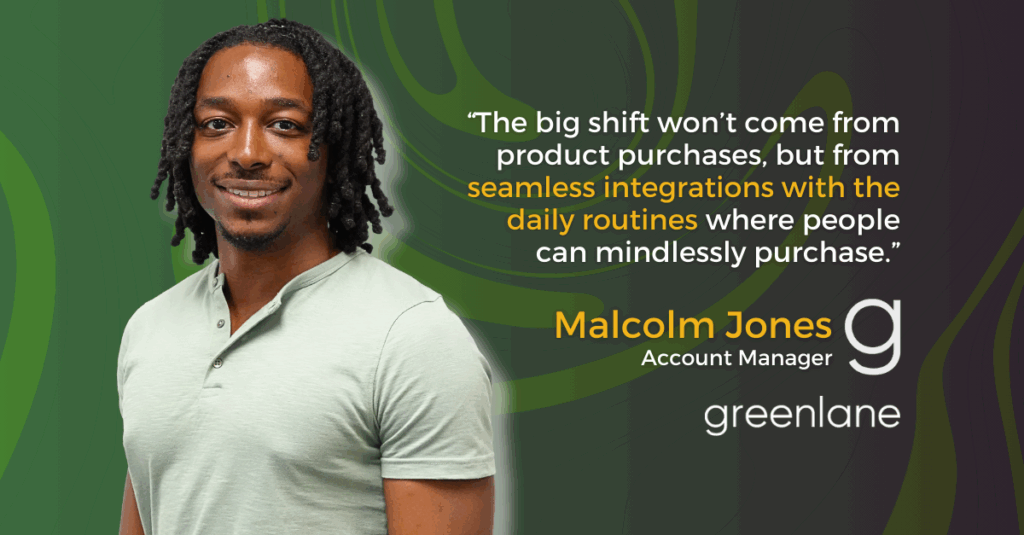
Malcolm Jones agrees. He adds that the big shift won’t be from product purchases, but from “seamless integrations with the daily routines people can mindlessly purchase.” He specifically predicts that “agentic purchasing becomes mainstream starting with grocery and food delivery apps.” Consumers already trust apps like DoorDash, UberEats, and Grubhub, and they frequently reorder the same foods, which makes this the perfect condition for agentic automation. Instead of browsing, users will approve preferences once and let the agent handle everything, and get their normal order status updates.
Dylan Jones has seen Google’s Agentic capabilities expand (and usage stagnate) in 2025, and has no doubt the search engine will continue to expand allowing for purchases within Google Shopping without confirmation clicks.” However, he is skeptical of major changes this upcoming year, believing “that very few users are going to be willing to give their credit card to a robot” beyond early adopters.
4. Marketing Focus is Moving Beyond Google
Search is no longer a Google-only game. To stay visible, you need a “Search Everywhere Optimization” mindset that ensures your brand is present and authoritative across multiple surfaces.
We must recognize the importance of other platforms and formats in 2026:
- Produce more video: Short attention spans beg for short-form videos and ways to stand apart from AI-produced text.
- More UGC may be hitting the SERPs: We continue to see the momentum from platforms like Reddit and TikTok, and search engines must reflect where real conversations are happening.
- Optimize for all formats: Optimization must extend beyond standard text to multimodal content like videos and forum-style discussions to meet the user intent across these diverse channels.
5. Technical SEO: Structured Data & Generative Engine Optimization (GEO)
The key to visibility lies in presenting your content in a way that allows AI to easily digest it. That’s why Technical SEO still matters and maintains a strong footing of relevance in 2026.
Using structured data to define your content — placing product info, author data, and clear definitions high up in your HTML — helps LLMs ingest and understand your data without having to make as many assumptions. Making sure that your content is delivered in a way that allows AI crawlers to read it (*cough cough* not rendered via JavaScript) is an area of focus that many websites haven’t yet focused on.

The industry has to start tying content planning/structure and technical foundations closer together in order to earn these AI citations. Structured, quality content that answers complex questions in simple ways is key to winning citations
Keep Up with New SEO Changes with Greenlane Marketing
This is the first full calendar year SEOs everywhere are strategizing to rank in Google’s new AI Overviews and artificial intelligence-driven search features.
Our team is checking daily for updates and is innovating our tactics to get our clients ranking organically in the ever-changing online SERP pool. Let us help you do the same!
Subscribe to our blog to stay informed on SEO trends in the space, or contact us for SEO help today.