A Mid-Year Check on Our 2026 SEO Trends Predictions
Back in December, our team sat down and made our best educated guesses about what we thought digital search would look like in 2026. We shared those predictions publicly in two separate posts: one for SEO trends and one for Paid Media.
Now that we’re halfway through the year, it felt like the right time to do an honest check-in.
Did we get it right? Mostly, yes. Are there a few places where things went a little differently? Also yes. And are there some completely new developments that no one predicted? A few.
That’s actually what makes this worth writing. Predictions are only useful if you revisit them.
So, here’s our midpoint report, prediction by prediction, with honest verdicts from the team.
1. Content Regurgitation Won’t Be Enough to Rank (Confirmed)
Original 2025 prediction from myself: Brands that simply summarize existing content will lose visibility. Standing out requires showcasing the faces and real expertise behind a brand, leaning into E-E-A-T.
This one has absolutely held up, and honestly, the situation has gotten worse faster than I expected.
AI Overviews now appear on roughly 48% of all Google searches, up from about 31% at the start of 2025. When an AI Overview appears on a SERP, organic CTR for the results below it drops between 34% and 61%. If your content is just a repackaging of what already exists online, you’re competing hard for clicks that are disappearing.
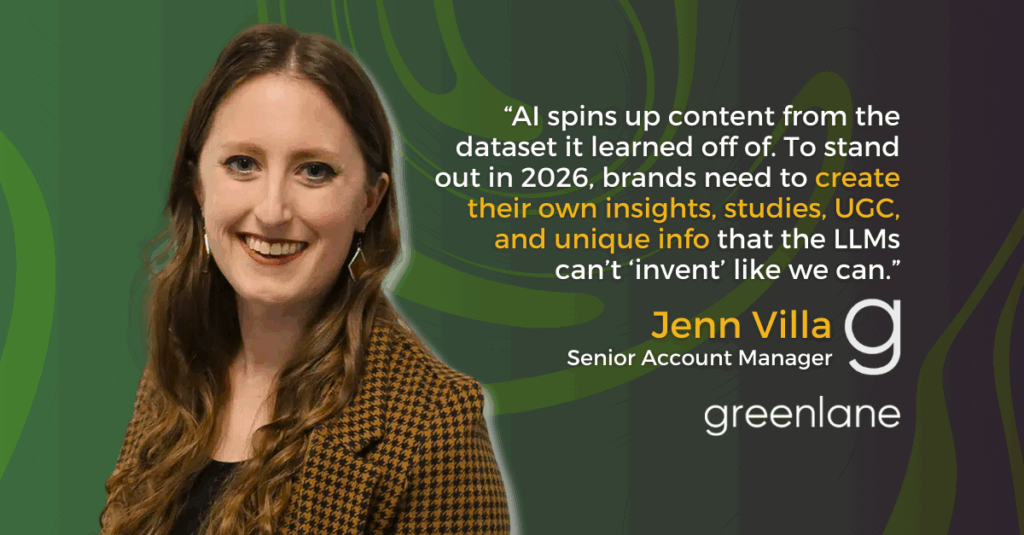
What I wrote about earlier this year in my piece on content degradation still stands: AI can spin up generic content endlessly, but it can’t replicate something you actually lived or researched yourself. The brands holding onto organic visibility right now are the ones with real data, real faces, and content that a large language model simply can’t invent.
The “faces behind brands” piece is still a work in progress, though. We’re seeing more experts showing up in video content and on third-party channels, but most of our clients haven’t fully committed to that strategy yet. That’s a strategy we keep pushing.
2. Informational Content Must Work Like a Landing Page (Confirmed)
Original prediction from Adam Wells: LLMs rely on fresh content. Informational pages need to be kept current, integrated with CTAs, and treated less like passive blog posts and more like commercial assets.
Adam called this one correctly, and the medical space in particular is proving his point in a painful way. Industries like healthcare and fintech have been especially hard-hit by AI Overviews absorbing what used to be high-traffic informational queries. Articles that used to drive thousands of visits per month are now driving dozens.

What Adam has been doing in response, and what I think is genuinely worth sharing with other SEOs, is targeting what he calls “super long-tail” keywords: question-based, zero-search-volume queries that still appear in tools like Semrush because someone typed them. These are clearly conversational, AI-adjacent questions that traditional keyword targeting would have skipped entirely. If someone is specific enough to type it, they probably want a real answer, not an AI summary.
The CTA and freshness side of this is also real. Informational pages that haven’t been touched in two or three years are losing ground quickly. This prediction was accurate, and it’s now a core part of how we’re approaching content strategy.
3. Technical SEO Maintains Strong Relevance (Confirmed)
Original prediction from Dylan Jones: Structured data, crawling, rendering, and site architecture will continue to matter, especially as AI systems need well-structured content to understand and cite.
Confirmed. Google’s Search Console added AI impression reporting earlier this year, which is new evidence that the technical side of how your site is structured matters for AI visibility, not just traditional rankings.

The JavaScript rendering conversation has quieted a bit, which probably means either that more people are solving it, or that AI crawlers have gotten better at handling it. Either way, structured data is still a meaningful lever, and site architecture continues to be part of the foundation. We’re crossing this one off the list as confirmed.
4. Search Marketing Focus Is Moving Beyond Google (In Progress)
Original prediction: Brands need a “search everywhere” mindset. Video, social search, UGC, and non-Google platforms are becoming meaningful parts of the visibility picture.
We’re seeing that 37% of consumers now start searches with AI tools rather than Google. In fact, ChatGPT hit 1 billion monthly active users in May 2026. Holy cow!
At the same time, Google still commands approximately 90% of global search traffic, and the share of people who “usually use Google for research” actually grew year over year. So the picture is more nuanced than the headlines suggest. What’s happening is that AI tools are capturing the new growth in information-seeking behavior, rather than cannibalizing existing Google usage, at least for now.
The practical implication: your brand needs to be findable in AI answers, in video results, and in forum-style discussions, not just in blue links. This prediction is directionally right, and it’s still unfolding.
5. Agentic Commerce Goes Mainstream, Starting with Grocery & Food (Not Yet)
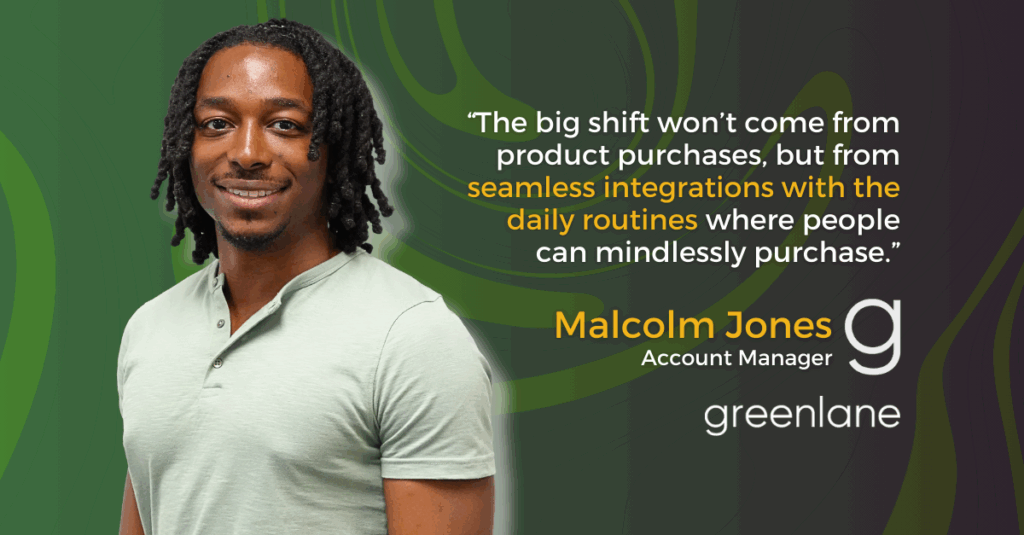
Original prediction from Malcolm Jones: AI agents will start making purchases on behalf of consumers, beginning with grocery and food delivery, where routine reorders are the norm.
This one is directionally right, but the timeline is longer than Malcolm predicted. Google announced agentic purchasing capabilities at I/O, but the actual checkout experience is still rolling out, and consumer adoption is slow. The main friction point remains trust: most people aren’t ready to hand their credit card to an AI agent, even for a routine grocery order.
There is a bright spot worth noting. Aldi recently launched AI-powered meal planning inside their app, where you can set a budget, save protein preferences, pick recipes, and have the ingredients automatically added to your cart. That’s a real step in the agentic direction. But it’s still user-initiated, not fully autonomous.
The building blocks are there. The adoption curve just needs more time.
What We Didn’t Predict: New Themes Emerging
Some of the most interesting conversations from our July roundtable weren’t about the old predictions at all. They were about things that came up in 2026 that none of us had on our radar in December. Here’s what our team is watching out for:
The Germany Ruling Could Reshape How Google Handles AI Overviews
In May 2026, the Regional Court of Munich issued a preliminary injunction holding Google liable for false claims made about two publishing companies in its AI Overviews. The court’s reasoning is significant: because Google’s AI generates the summary text rather than just linking to sources, it is classified as Google’s own content, not a neutral aggregation of third-party results.
For years, Google (and Meta, for that matter) have avoided legal liability for content on their platforms by arguing they are distributors, not publishers. This ruling challenges that framing directly. If it spreads beyond Germany, or if other courts follow suit, the implications for how AI Overviews are generated and constrained could be significant. At minimum, it may push Google toward relying more heavily on its Knowledge Graph, where the data is verified, and away from synthesizing claims from sources it can’t fully vouch for.
Dylan’s take from the roundtable: watch whether Google starts surfacing fewer AI Overview responses for entities it can’t confirm, simply to reduce liability exposure.
AI Features Are Starting to Get Paywalled
Adam Wells flagged this one in our July discussion, and it’s already showing up. AI platforms are beginning to move features from free tiers to paid tiers. Claude Fable and similar premium model access are early examples. As data center costs rise (New York State has already enacted a one-year moratorium on new data center construction, with heavy taxes to follow), and as these platforms face pressure to become profitable, paywalling is the most logical path.
This isn’t a reason to panic, but it is a reason to audit which AI tools your team depends on and understand what happens to your workflow if their pricing changes.
SEO Trends in Late 2026
The theme that came up most in our roundtable, and that I’ve been personally chewing on, is this: the brands that perform well in the second half of 2026 will be the ones that invest in being known, not just being found.
That means brand presence across third-party channels, not just your own site. It means original content that only you can produce. It means making sure that what AI says about you, when someone asks, is accurate and reflects the depth of what you actually do.
That’s a more holistic kind of marketing than most brands are used to, but it’s where we’re headed. And as a team, it’s what we’re already building strategies around.
At Greenlane Marketing, we update our thinking as the industry moves, and we share it here. If you want our team’s take on how these trends are affecting your specific organic or paid strategy, reach out and let’s talk.
Subscribe to our blog to get the next update when it lands.